Shockwave can feel uncomfortable, particularly over a sensitive tendon. The intensity can be adjusted throughout the treatment to keep it manageable.
Shockwave Therapy in Huddersfield
Shockwave therapy is a non-surgical treatment that may be considered for certain persistent tendon and plantar fascia problems.
At Huddersfield Physiotherapy Clinic, shockwave is provided following a physiotherapy assessment and is combined with an individual rehabilitation programme where appropriate.
The clinic uses specialist Storz Medical shockwave equipment.
What is shockwave therapy?
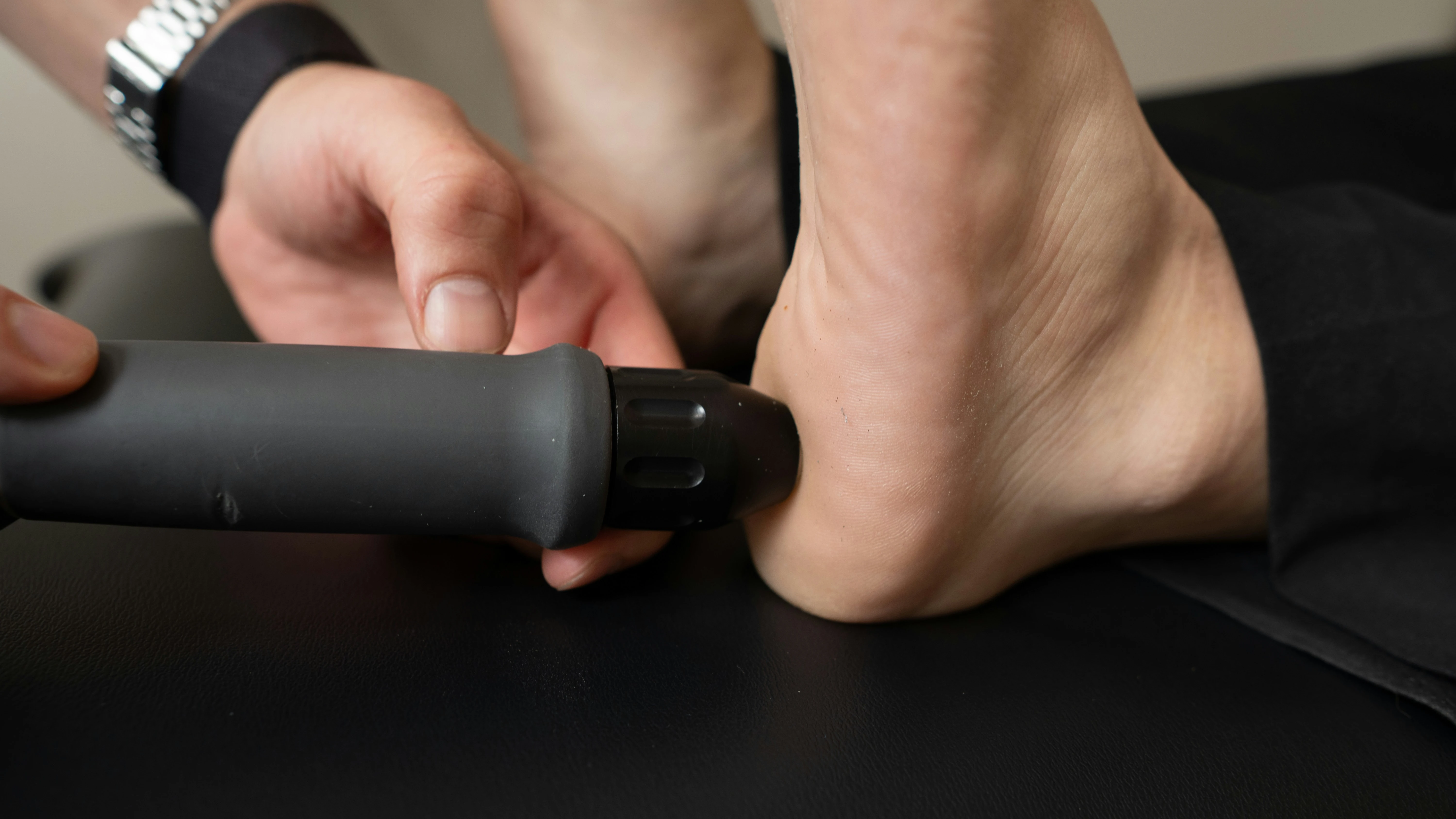
Extracorporeal shockwave therapy uses controlled acoustic pulses applied to the affected area through a handheld treatment head.
Despite the name, it does not involve an electrical shock. The treatment delivers mechanical energy to the tissues and is intended to encourage a biological response within the treated area.
Shockwave is not a stand-alone cure. Activity management and progressive strengthening usually remain important parts of treatment.
Who might shockwave be suitable for?
Shockwave may be considered for selected people with persistent conditions such as:
- Achilles tendinopathy
- Plantar heel pain or plantar fasciopathy (fasciitis)
- Patellar tendinopathy
- Tennis elbow
- Gluteal tendinopathy
- Certain shoulder tendon problems
It is generally considered when symptoms have continued despite appropriate initial management. I would generally not recommend shockwave treatment until after 3 months of your symptoms starting.
Pain near a tendon is not always caused by tendinopathy. A physiotherapy assessment is therefore needed before treatment begins.
What happens during an appointment?
Initial assessment
Your first appointment lasts up to 60 minutes and includes:
- A detailed discussion about your symptoms
- Assessment of the painful area
- Relevant strength and movement tests
- Screening for contraindications
- An explanation of the treatment, evidence and alternatives
- Discussion of your rehabilitation programme
If shockwave is appropriate and you are happy to proceed, your first treatment can normally be provided during this appointment.
Shockwave treatment
Gel is applied to the skin and the handheld treatment head is placed over the target area. A series of acoustic pulses is then delivered.
The intensity is adjusted according to the condition and your comfort. The shockwave portion of the appointment usually takes only a few minutes.
Follow-up appointments
Follow-up sessions last approximately 30 minutes. They include a review of your response, shockwave treatment and progression of your rehabilitation where appropriate.
Potential benefits
For appropriately selected conditions, shockwave may offer:
- A non-surgical treatment option
- Treatment without an injection
- A relatively short treatment time
- Potential improvement in pain and function
- An additional option when symptoms have not responded sufficiently to initial rehabilitation
- Treatment that can be combined with progressive exercise
Results vary, and an improvement cannot be guaranteed. The evidence is stronger for some conditions than for others, which will be discussed during your assessment.
Pricing
Initial assessment – up to 60 minutes: £60
This includes the first shockwave treatment if it is clinically appropriate.
Follow-up shockwave appointment – approximately 30 minutes: £50
Shockwave package: £195
The package includes:
- Initial 60-minute assessment
- First treatment where appropriate
- Three follow-up shockwave appointments
- Individual rehabilitation advice
Package saving: £15
Additional shockwave appointments, if clinically indicated: £50
Frequently asked questions
Does shockwave hurt?
How many sessions will I need?
A course commonly involves an initial assessment and three follow-up treatments. The appropriate number depends on your condition and response.
Additional appointments will only be recommended when clinically justified.
How quickly will I notice a difference?
Some people notice early changes, while others improve more gradually in the weeks following treatment. Not everyone responds to shockwave.
Do I need to stop exercising?
Not necessarily. Activity may need to be modified depending on the condition, but complete rest is not always required.
You will receive individual advice about running, sport, work and strengthening exercises.
Are there side effects?
Possible short-term effects include:
- Soreness
- Redness
- Mild swelling
- Bruising
- Temporary numbness or altered sensation
Potential risks and aftercare will be explained before treatment.
Is shockwave suitable for everyone?
No. Shockwave may not be appropriate in the presence of certain medical conditions, medication, pregnancy, infection, impaired sensation or problems affecting blood clotting.
A safety screening will be completed before treatment.
Do I need a GP referral?
No. You can book directly with the clinic.
If your assessment suggests that shockwave is not appropriate or that further investigation is needed, I will explain the available options.
Is shockwave a replacement for exercise?
Usually not. Shockwave is generally most appropriate as one part of a wider treatment plan that includes progressive loading and rehabilitation.